

Ever thought defending yourself could get you in trouble? The idea of being arrested for self-defense is more complicated than you might think. Laws let people defend themselves, but it’s hard to know when it’s okay.
Self-defense laws change a lot from state to state. This makes it tricky for people to protect themselves without getting into trouble. It’s very important to know your rights to avoid getting arrested or charged.
Is defending yourself a crime? Not always, but it depends on the situation. Knowing the exact legal rules can help you protect yourself without facing big legal problems.
Key Takeaways
- Self-defense laws are complex and vary by state
- Force used must be proportional to the threat
- Reasonable belief of imminent danger is key
- Some states have “stand your ground” laws
- Legal documents and evidence are very important in self-defense cases
Understanding Self-Defense Laws in the United States
Learning about self-defense laws is important. Each state has its own rules. It’s key to know the basics of these laws.
Self-defense lets people protect themselves from harm. But, when is it not okay to defend oneself? It depends on a few important things.
Definition of Self-Defense
Self-defense means using force to protect oneself from harm. It has a few main parts:
- Immediate danger of bodily harm
- Reasonable belief of threat
- Proportional response to the danger
Key Legal Principles
The law looks at self-defense in detail. It considers many things:
| Principle | Description |
|---|---|
| Imminent Threat | Danger must be immediate and present |
| Reasonable Force | Response must be proportional to the threat |
| Duty to Retreat | Some states require attempting to escape before using force |
Difference Between Self-Defense and Other Justifications
Self-defense is different from other legal defenses. It’s about protecting oneself right away. It’s not just about feeling threatened, but really being in danger.
Knowing these legal details is very important. It can help you stay safe and avoid trouble. Always check your local laws and talk to a lawyer to understand your state’s rules.
Types of Self-Defense
Self-defense is a key legal strategy to keep safe from harm. When danger comes, people have many ways to defend themselves legally. Knowing these methods can help avoid legal trouble if you defend yourself.
Choosing the right self-defense strategy is important. About 30% of self-defense cases win in court. It’s key to know the different ways to defend yourself.
Physical Self-Defense Against an Unarmed Attacker
Physical self-defense is about protecting yourself from harm. When facing an unarmed attacker, you must respond legally:
- Use force that matches the threat
- Avoid making things worse
- Keep safe without hurting too much
Self-Defense with a Deadly Weapon
Using a deadly weapon for self-defense is risky. The accused must prove they acted justly. Important things to remember are:
- Show there was a real threat to life
- Prove you couldn’t get away safely
- Show you only wanted to protect yourself
Verbal Self-Defense Strategies
Verbal skills can stop fights and lower legal risks. Good verbal self-defense is about:
- Staying calm and talking clearly
- Using ways to calm things down
- Keeping distance when you can
Knowing how to defend yourself helps keep you safe and avoids legal problems. Always talk to a lawyer for advice in your situation.
Conditions for Justifiable Self-Defense
To know when self-defense becomes manslaughter, you need to understand the law. The law lets people protect themselves, but there are rules and limits.
Self-defense laws are complex. The courts look at many things to decide if it’s okay to defend yourself or if it’s too much.
Imminent Threat Requirement
An imminent threat is key for self-defense. The danger must be:
- Immediate and present
- Creating a reasonable fear of bodily harm
- Seen by a reasonable person in the same situation
Reasonable Force Standard
What makes force too much in self-defense? The law says the force must match the danger. This means:
- The response should match the danger level
- Deadly force is only for deadly threats
- A small fight doesn’t need extreme actions
Duty to Retreat Rule
In some places, you must try to get away before using force. California doesn’t make you retreat at home. But, it does in public places.
Experts say self-defense claims are not easy to win. The person defending must prove their actions were needed and right.
States with “Stand Your Ground” Laws
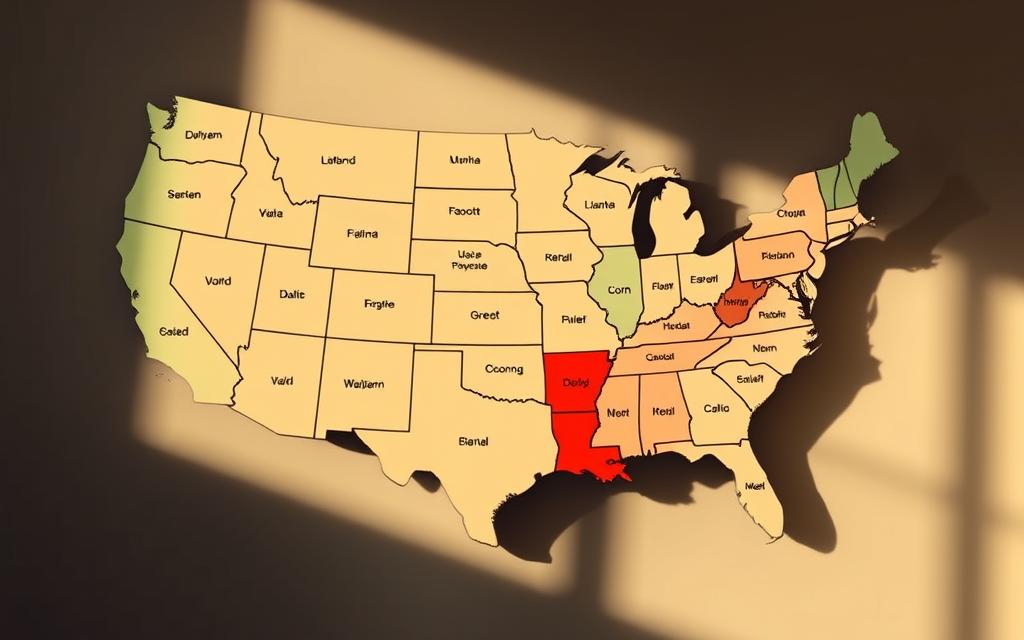
It’s important to know about stand your ground vs duty to retreat. These laws affect how people defend themselves in danger.
The castle doctrine shows a complex legal world. Self-defense laws differ a lot in each state. Now, 36 U.S. states have stand your ground laws or similar protections.
Core Principles of Stand Your Ground Laws
Stand your ground laws change how we defend ourselves. They let us defend without needing to run away first. They also let us use the right amount of force.
- Allowing individuals to defend themselves without mandatory retreat
- Permitting proportional force in self-defense scenarios
- Protecting individuals in various locations, not just their homes
Key States with Robust Stand Your Ground Protections
Some states have strong stand your ground laws. Florida is a key example:
- Florida: 26th state to enact stand your ground laws
- Experienced a 30% rise in justifiable homicide rates after 2005
- 70% of state residents support these self-defense laws
Legal Defense Implications
Stand your ground laws have big effects. They give more protection but also big legal risks. Only 30% of cases using these laws get charges dropped.
There are also racial issues in these cases. Black people are 2.5 times more likely to face charges than white people.
Situations That May Not Qualify as Self-Defense
Knowing when self-defense is illegal can help you avoid trouble. Not every fight is justified by self-defense. Some situations can make your defense into a legal problem.
When is self-defense seen as illegal? The law sets clear rules. These rules help keep your self-defense claim valid.
Mutual Combat Scenarios
Mutual combat is tricky legally. If you start a fight, saying it was self-defense is hard. The law sees starting a fight as agreeing to it. This usually means you can’t claim self-defense.
- Voluntary participation negates self-defense claims
- Intentionally provoking a confrontation disqualifies legal protection
- Courts examine the initial intent of both parties
Escalation of Conflict
Does self-defense cover protecting property if you make things worse? Usually, no. Using too much force or making a fight worse can turn your defense into assault.
- Proportional response is key
- Too much force means no self-defense
- Try to calm things down instead
Preemptive Strikes
Preemptive attacks are rarely okay as self-defense. The law needs an imminent threat that makes you fear harm. Attacking first can lead to legal trouble.
In California, self-defense must be seen as reasonable by others. Your fear of danger must be something most people would feel too.
How Self-Defense Claims Are Evaluated
When a self-defense case happens, police do a detailed check. They look at everything around the event to get the whole story.
They check self-defense claims in a few important steps:
- Collecting physical evidence from the scene
- Interviewing witnesses and involved parties
- Documenting injuries and medical records
- Analyzing the sequence of events
Role of Law Enforcement
Officers work hard to prove self-defense in court. They look for signs that support a self-defense claim, like:
- Proof of an imminent threat
- Evidence of proportional response
- Documentation of possible injuries
- Witness statements confirming the threat
Investigative Procedures
Police follow a set way to check self-defense claims. The burden of proof usually starts with the prosecution. But, if there’s self-defense evidence, it can change who has to prove it.
Evidence Collection
Important evidence includes medical records, injury photos, witness statements, and any video footage. It’s best to write down all the details right after it happens to help prove self-defense.
The main goal is to see if the actions were right and fair based on the threat. This is a detailed job that needs careful legal review.
Legal Consequences of Misusing Self-Defense
It’s important to know the law when you want to protect yourself. Using self-defense wrongly can cause big problems. These problems can last a long time.
If a self-defense claim is not right, you might face big legal issues. The legal troubles from self-defense can be very complex.
Criminal Charges
Using too much force can lead to serious crimes. Courts look closely at each self-defense case. They consider things like:
- How much force was used
- The real danger level
- If you could have run away safely
- Why you used self-defense
Civil Liability
Yes, you can be sued for self-defense. Even if you’re not charged with a crime, someone might sue you for money.
| Type of Lawsuit | Potential Consequences |
|---|---|
| Personal Injury Claim | Money for medical bills |
| Civil Battery Suit | Money for physical harm |
| Emotional Distress Claim | Money for emotional pain |
Long-Term Implications
Self-defense problems can affect you for a long time. They can hurt your job, licenses, friends, and future legal issues.
- Job chances
- Licensing
- Friendships
- Future legal issues
About 35 states have laws about standing your ground. Knowing your local laws and getting a lawyer is key to protecting yourself.
The Role of Witnesses in Self-Defense Cases
Witnesses are very important in understanding self-defense law. They help show if someone acted in self-defense. Their stories can change how a court sees a case.
Good witness stories can really change a self-defense case. Different witnesses give different views. They help tell what happened and why the person acted.
Eyewitness Testimony: The Critical First-Hand Account
Eyewitnesses saw the event happen. They give us what really happened. Their stories can:
- Back up what the defendant said
- Give more details about what happened
- Show if the person felt threatened
Expert Witnesses: Professional Insights
Expert witnesses know a lot about self-defense. They can:
- Check if the actions were right
- Look at physical evidence
- Talk about why someone might defend themselves
Character Witnesses: Establishing Credibility
Character witnesses tell us about the defendant’s past. They can:
- Show if the defendant is usually peaceful
- Give clues about their personality
- Help prove they acted right in the situation
| Witness Type | Primary Purpose | Key Contribution |
|---|---|---|
| Eyewitness | Direct Event Observation | Immediate Account of Incident |
| Expert Witness | Professional Analysis | Technical Understanding of Actions |
| Character Witness | Personal Reputation | Behavioral Context |
Choosing the right witnesses can really help in self-defense cases. Each witness gives a special view of what happened.
The Impact of Video Evidence
Digital evidence has changed how courts look at self-defense claims. Video footage gives key insights into what happened before, during, and after a possible self-defense situation. It offers clear proof that can help win or lose a case.
In today’s courts, video evidence is very important. It shows the small details of fights. These recordings can support or question what a defendant says happened.
Surveillance Footage: A Silent Witness
Surveillance cameras are now key in showing what really happened in self-defense cases. They give:
- Clear video of what happened
- A timeline of events
- Details about threats
- Support for what people say happened
Body Camera Footage: Law Enforcement Perspective
Police body cameras are another important source of video. They show what happened right away. This gives us important clues about self-defense situations.
Social Media Evidence: Digital Documentation
In today’s world, social media can be very important. It can show:
- What happened before the fight
- Why someone might have acted a certain way
- What people think of each other
- More about who was involved
When using video evidence, it’s very important to make sure it’s real and complete. Courts check if the video is true, full, and makes sense. They do this to make sure self-defense claims are fairly judged.
The Role of Jurisdiction in Self-Defense Cases
Understanding self-defense laws can be tricky. They change a lot from one place to another in the United States. Knowing these self-defense laws by state is key to keeping your rights safe.
State vs. Federal Legal Landscape
Every state has its own way of handling self-defense. This makes the laws different in each place. The big difference between state and federal laws can really change how cases are seen.
Key State Differences in Self-Defense Statutes
Looking at self-defense laws across states, we see big differences. There are two main kinds:
- Stand Your Ground states, where you don’t have to run away before using force
- Duty to Retreat states, where you must try to get away before using force
Local Legal Variations and Implications
The debate between stand your ground and duty to retreat shows how complex self-defense laws are. Some states, like Florida and Texas, have wider protections. But states like New York and Massachusetts have stricter rules.
Experts say it’s important to know your state’s self-defense laws. Local rules can add extra details that affect your defense.
Hiring Legal Representation
Dealing with a self-defense situation can be tough and full of legal hurdles. Knowing when to get a self-defense lawyer is key. It helps protect your rights and builds a strong defense.
The Critical Role of a Criminal Defense Attorney
A good criminal defense lawyer is your best friend when facing legal issues. About 25% of people claiming self-defense don’t know the law well. So, having a lawyer is very important.
- Protect your legal rights during investigation
- Prevent possible self-incrimination
- Gather and keep important evidence
- Talk to prosecutors
Finding the Right Legal Support
Finding the right lawyer to defend your self-defense claim is very important. The National Council on Crime and Delinquency says a good lawyer can really help your case.
Key Questions to Ask Possible Attorneys
- How many self-defense cases have you won?
- Do you know the local laws well?
- Can you tell me your plan for my case?
- What might happen with my case?
Getting legal help quickly can stop big legal problems later. Criminal defense lawyers help you deal with police. They make sure your rights are kept safe all the way through the legal process.
The Aftermath of a Self-Defense Incident
Being in a self-defense situation can change your life. The days and weeks after can be hard and emotional. It’s key to know how to talk to police to protect your rights and feel better.

Emotional and Psychological Impact
Using self-defense can deeply affect you. You might feel:
- Shock and disbelief
- Post-traumatic stress
- Anxiety and hypervigilance
- Guilt or moral conflict
Dealing with the aftermath can be very hard. Getting help from a counselor is important. They can help you deal with your feelings and find ways to cope.
Community and Family Reactions
Self-defense incidents can affect those around you. Family members might feel:
- Initial shock and confusion
- Concern for legal implications
- Potential social stigma
- Emotional support challenges
Steps for Moving Forward
To get through this, you need to take certain steps:
- Contact a criminal defense attorney right away
- Write down everything about the incident
- Don’t talk about it in public
- Focus on your mental health
Getting legal help and taking care of your mental health are very important after a self-defense incident.
Resources for Understanding Self-Defense Law
Understanding self-defense laws can be tricky. You might wonder about self-defense laws for women or what legal protections you have. Knowing your rights is key to staying safe.
There are many ways to learn about self-defense. You can find education and support to help you.
Legal Aid Organizations
- National Center for Victims of Crime
- American Bar Association’s Pro Bono Resources
- Local Legal Aid Clinics
Self-Defense Workshops and Classes
Workshops and classes teach you a lot. They cover important topics like self-defense laws. You’ll learn how to protect yourself in different situations.
| Workshop Type | Focus Area | Target Audience |
|---|---|---|
| Legal Self-Defense Seminar | Legal Rights and Protections | Adults, College Students |
| Women’s Safety Workshop | Personal Protection Strategies | Women of All Ages |
| Youth Self-Defense Class | Legal Awareness for Minors | Teenagers, Young Adults |
Online Legal Resources
The internet has lots of info on self-defense laws. Websites, blogs, and government sites give the latest on legal matters.
- State Bar Association Websites
- Legal Information Institutes
- Government Legal Resources
Learning about self-defense helps you know your rights. It also teaches you how to defend yourself.
Case Studies of Self-Defense in Court
Real-life self-defense cases show how courts apply self-defense laws in the U.S. They help us understand the legal side of self-defense.
The law on self-defense can be tricky and sometimes shocking. Studies show how courts look at self-defense claims:
- Over 12,000 women are jailed for homicide
- 30 states have “stand your ground” laws
- A 1969 study found women act in self-defense more often
Notable Self-Defense Case Analysis
Courts look at many things when they judge self-defense cases. The Blevins case is a good example. In it, the Minnesota Supreme Court said you must try to get away before using force.
Lessons from Real-Life Self-Defense Case Outcomes
Here are important lessons from self-defense cases:
- What happens around you matters a lot
- Abuse history is now considered
- How you see danger is very important
Public and Legal Perspectives
People often have strong feelings about self-defense cases. They show the hard balance between staying safe and following the law. Experts like Leigh Goodmark say old self-defense laws don’t match real life, because they assume everyone is equally strong.
These studies remind us of the need to know the law well. And to get help from a lawyer if you might need to defend yourself.
Conclusion: Know Your Rights and Responsibilities
To avoid arrest for self-defense, you need to know the law well. Each state has its own rules about self-defense. It’s important to know these rules in your area.
Self-defense laws are not simple. They are complex rules that need careful understanding. Knowing your rights is key.
Experts say it’s good to learn about self-defense rights. You should know the difference between defending yourself and doing something wrong. Knowing when to use force and documenting threats can help a lot.
It’s also important to know when you can be scared. This can affect how the law sees your actions.
Getting help from a lawyer is a good idea. A lawyer can guide you based on your area’s laws. They can help you understand the law, plan for different situations, and protect your rights.
Being ready for self-defense is not just about staying safe. It’s also about knowing the law. By staying informed and being careful, you can protect yourself and avoid legal trouble.


