Are you wondering how to change a minor’s last name legally? Changing a child’s last name is complex and emotional. It requires going through legal steps that differ by state.
Changing a child’s last name is a big decision. Parents need to know the legal rules, court needs, and possible problems. This change can be due to marriage, divorce, adoption, or personal reasons. It needs careful planning and preparation.
This guide will help you understand how to legally change a child’s last name. It offers insights to help parents make the right choice.
Key Takeaways
- Legal name changes require consent from both parents or guardians
- Filing fees can range up to several hundred dollars
- The process may take weeks to several months
- Court approval depends on the child’s best interests
- Documentation and proper notification are key
Introduction to Changing a Child’s Last Name
Changing a child’s last name can be hard for parents going through big changes. It needs careful legal steps and thinking about feelings. This is important for both the law and the child’s feelings.
Parents might want to change a child’s name for many reasons. These reasons often come from big life events. These events can change how a family works and how a child sees themselves.
Understanding the Reasons for Name Change
There are many reasons why families might want to change a child’s name. These reasons include:
- Divorce and remarriage
- Adoption proceedings
- Safety concerns
- Alignment with cultural or personal identity
- Establishing legal connection with a stepparent
Key Legal Considerations
Changing a child’s name after a divorce has its own rules. Courts always think about what’s best for the child when they decide on a name change.
| Legal Factor | Importance |
|---|---|
| Parental Consent | Critical for uncontested name changes |
| Child’s Preference | Considered for children over 10 years old |
| Potential Emotional Impact | Evaluated by court psychological assessment |
Knowing these legal points helps parents get ready for the name change process. They can understand what to expect and plan better.
Legal Grounds for Changing a Child’s Last Name
Changing a child’s last name is complex. Parents need to think about many things and laws.
- Adoption proceedings
- Divorce and blended family situations
- Establishing paternity
- Protecting family unity
Common Scenarios for Name Changes
Parents should know why courts change a child’s last name. In blended families, about 30% pick a common last name. Courts look at family dynamics a lot.
Parental rights are key in name changes. About 50% of custodial parents change their child’s name after divorce. Kids aged 12 and up have more say.
Jurisdictional Differences
Rules for changing a child’s last name vary by state. For example, New Jersey courts focus on what’s best for the child. The cost to file can be $100 to $500, depending on where you are.
Important things to think about include:
- Child’s emotional well-being
- Consent from both parents
- Potential impact on family relationships
- Cultural and familial circumstances
The legal system tries to find a balance. It looks at what’s best for the child in name change cases.
The Legal Process for Changing a Child’s Last Name
Changing a child’s last name needs careful planning. You must know the legal steps to take. This ensures a smooth process.
Changing a child’s last name involves important steps. Each state has its own rules. But most follow a similar process for name change petitions.
Gathering Essential Documentation
For a successful name change, you need the right documents. Here are the key ones:
- Completed Petition for Name Change
- Child’s birth certificate
- Proof of your relationship to the child
- Consent from the other parent (if needed)
- Photo ID from the government
Filing the Court Petition
Knowing how long it takes is important. The time varies, usually 2-6 months. It depends on the court’s rules.
| Document | Average Cost | Processing Time |
|---|---|---|
| Name Change Petition | $150 | 2-4 weeks |
| Court Filing | $25-$500 | 4-12 weeks |
You must file the petition in your local family court. It’s usually in the county where the child lives. Each place has its own rules. So, it’s good to check the local court’s guidelines.
The Role of Custodial Rights

Changing a child’s last name is complex. It involves understanding custodial rights and guardianship. Legal aspects can greatly affect a child’s future.
Understanding Parental Consent and Child’s Preferences
Can a child refuse a name change? Age matters a lot. Kids over 10 can give input or consent. The court looks at their maturity and wishes.
Key Factors in Name Change Decisions
Does changing a last name affect custody? Courts look at several important things:
- Child’s emotional well-being
- Impact on family relationships
- Potential psychological effects
- Stability of the family environment
Custodial Arrangement Considerations
Finding the right lawyers for child name changes is key in complex custody cases. Each situation needs a special legal approach:
| Custody Scenario | Name Change Complexity | Court Considerations |
|---|---|---|
| Joint Custody | High | Both parents’ consent needed |
| Sole Custody | Moderate | Custodial parent’s request reviewed |
| Limited Parental Rights | Low | Little input from non-custodial parent |
Legal experts suggest detailed documentation and clear talks for name change requests. Each case is different, needing careful thought for the child’s best interests.
Notification Requirements
Changing a baby’s last name legally needs careful steps. Parents must follow certain rules to make sure everything is done right.
When you want to change a baby’s name after knowing who the father is, it’s important to know who to tell. The law says you must tell everyone who has a say in the child’s life.
Who Must Receive Notification
- Biological non-custodial parent
- Legal guardian
- Other parent with possible custody rights
- Court-appointed representatives
Notification Methods
Can a stepparent change a child’s last name? Yes, but you must use certain ways to tell people:
- Certified mail with return receipt
- Personal service by sheriff
- Third-party professional process server
| Notification Type | Requirements | Cost |
|---|---|---|
| Certified Mail | USPS Form 3811 | $5-$15 |
| Sheriff Service | Official delivery | $25-$75 |
| Publication Notice | 3 consecutive weeks | $100-$300 |
Note: Specific requirements may vary by state and individual court jurisdictions.
Court Procedures and Hearings
Changing a child’s last name is a legal process. It needs careful preparation and understanding of court rules. This journey can be tough, but knowing what to expect helps parents.
Parents must be ready for a detailed court hearing when changing a child’s name. Laws about name changes differ by state. But most follow similar steps.
What to Expect During the Court Hearing
The judge will look at the petition closely. They will think about:
- The child’s best interests
- Why the name change is needed
- How it might affect the child’s relationship with both parents
Tips for Presenting Your Case Effectively
To win a name change case, you need a good plan. Here are some tips:
- Collect all the supporting documents you can
- Make your testimony clear and short
- Show how the name change will help the child
There are reasons a court might say no to a name change. They might think it could:
- Hurt the child’s feelings
- Break family ties
- Make things confusing for the child
After a name change is approved, you need to update the birth certificate. This involves:
- Getting a court order
- Reaching out to the vital records office
- Providing the needed papers
| Court Requirement | Average Cost | Typical Timeline |
|---|---|---|
| Filing Fee | $25 – $500 | 2-6 months |
| Newspaper Publication | $30 – $100 | 2-4 weeks |
| Birth Certificate Update | $50 – $150 | 4-8 weeks |
Knowing these steps helps parents feel more confident and clear about the name change process.
Factors Considered by the Court
When parents want to change a child’s last name, courts look at many things. They make sure the change is good for the child. The family court name change process checks important factors that affect the child’s feelings and mind.
Courts look at several important things when deciding on a name change:
- Child’s emotional connection to current and proposed last name
- Quality of relationship with non-custodial parent
- Potential impact on the child’s sense of identity
- Child’s preference (if aged 10 or older)
Best Interests of the Child
Judges focus on the child’s mental health. Is a name change permanent? Sometimes, not always. They know children’s needs change, and the decision must consider their long-term well-being.
They think about if changing the last name will make the child feel safer or cause more stress.
Evidence to Support Your Petition
Strong petitions have good reasons and evidence for changing the child’s name. This might include:
- Testimonials from teachers or counselors
- Evidence of limited parental involvement
- Psychological evaluation supporting the name change
Does changing a child’s last name affect child support? Experts say no. The court keeps the same support rules, even if the name changes.
Potential Objections and Challenges
Changing a child’s name can face legal hurdles. Parents need to know what might stop their petition. They must be ready to face these challenges.
When you ask to change a child’s name, you might hit some roadblocks. Courts look closely at these requests. They want to make sure it’s best for the child.
Common Reasons for Denial
- Insufficient justification for the name change
- Potential negative impact on the child’s relationship with the other parent
- Lack of proper documentation
- Incomplete legal notification procedures
Strategies to Overcome Objections
To change a child’s name, you need a good plan. Parents should gather all the evidence they can. This shows why the name change is good for the child.
- Collect detailed documentation supporting the name change
- Provide clear evidence of the child’s best interests
- Address any concerns from the other parent
- Prepare a strong argument for the court
Courts care a lot about the child’s feelings and health. Having a solid case with good reasons helps a lot. If the other parent disagrees, the judge will look at how it affects the child.
Knowing the legal steps for changing a child’s name can help a lot. Talking to a family law lawyer can give you great advice. They can help you through this tough process.
Costs Associated with Name Changes
It’s important for parents to know how much it costs to change a child’s last name. The cost can change a lot based on where you live and your situation.
Typical Filing Fees and Court Costs
The cost for a child’s legal name change is usually between $100 to $500. Here are some main costs:
- Court filing fees: $200-$300
- Publication costs for legal notices: $70-$150
- Certified copy of court order: $10-$15 per document
Potential Additional Expenses
When you get legal papers for a child’s name change, you might need to pay more. This includes changing official records. Here are some extra costs:
- Driver’s license update: $10-$35
- Passport renewal: Up to $110
- Birth certificate modification: Varies by state
| Expense Category | Estimated Cost Range |
|---|---|
| Court Filing Fee | $200-$300 |
| Legal Publication | $70-$150 |
| Certified Document Copies | $10-$15 each |
| Total Estimated Cost | $280-$465 |
If money is tight, many places offer help. You can ask your local court about fee waivers. They might help with the cost of changing your child’s name.
Timeline for Completing the Name Change Process
Changing a child’s name is a big step. It involves a detailed legal process. This process can take different amounts of time, depending on the situation.
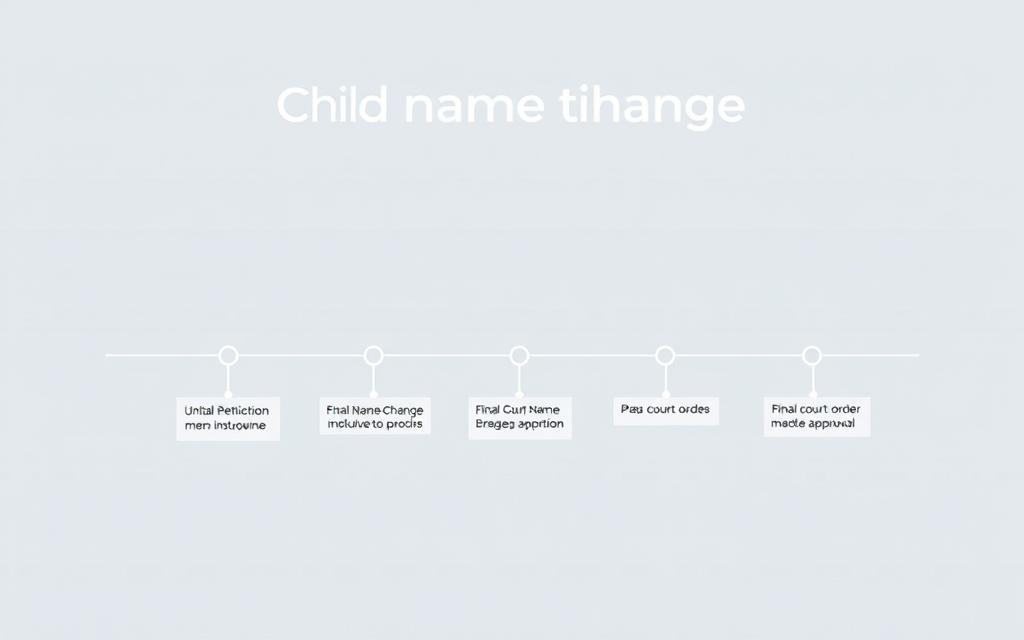
The time it takes to change a name can be 2-6 months. Several things can affect how long it takes:
- Court processing speeds
- Completeness of documentation
- Jurisdictional requirements
- Potential parental objections
Estimated Processing Timeframes
Courts usually need 30-90 days to review a name change. Here’s what happens:
- Initial petition filing: 1-2 weeks
- Document review: 30-45 days
- Court hearing scheduling: 30-60 days
- Final court order processing: 2-4 weeks
Potential Delay Factors
Some things can make the process take longer. These include:
- Incomplete paperwork
- Disagreements between parents
- Complex custody situations
Being prepared and having all documents ready can help. This can make the process smoother.
It’s wise to plan extra time for the name change process. Getting help from local courts or lawyers can make things easier. It helps set realistic expectations.
Post-Approval Steps
After you go through the family court name change process, you have to do some important steps. These steps help update your child’s identity documents.
The next steps are about updating legal documents and telling important places about your child’s new name. First, get certified copies of the court order. This is key for updating a birth certificate after a name change.
Updating Official Records
To finish the legal documents for your child’s name change, do these things:
- Ask for many certified copies of the court name change order
- Call your state’s vital records office to change the birth certificate
- Update Social Security documents
- Get a new passport if needed
Institutional Notifications
After you update official records, tell different places about the name change:
- Tell the school administration
- Inform healthcare providers
- Let insurance companies know
- Notify banks and financial places
- Tell dental and medical offices
Pro tip: Keep copies of the court order ready. This makes it easier to prove the name change at each place.
Always keep your records in order. Also, tell everyone about the name change early. This helps your child’s new legal identity go smoothly.
Alternatives to a Legal Name Change
Parents looking for ways to change their child’s name have options. Changing a child’s last name legally needs court approval. But, there are simpler ways to handle name changes without going to court.

For those wondering how to change a minor’s last name, here are some ideas:
- Social Name Usage
- School Record Modifications
- Nickname Incorporation
- Hyphenated Name Options
Informal Name Changes
Informal name changes offer families a way to change names without court. A legal name change isn’t always needed. Sometimes, other ways can meet family needs.
Nicknames and Social Usage
Many families use nicknames or preferred names in social situations. These names aren’t legal changes. But, they can be useful for how people see themselves.
| Option | Advantages | Limitations |
|---|---|---|
| Social Name Usage | Flexible, No Court Fees | Not Legally Binding |
| School Record Nickname | Easy Implementation | Limited to Educational Setting |
| Hyphenated Names | Preserves Family Connections | Requires Mutual Agreement |
When looking at alternatives to legal name changes, families should think about their situation. They should also think about what the future might hold.
Conclusion
Changing a child’s last name can seem hard, but knowing the steps helps. Parents thinking about this must think about the legal rules, how it feels, and what it means for the future.
The rules for changing a child’s last name are important. You need to get the right papers and make a strong case in court. This might take some time and money, but it’s for your child’s good.
Changing a child’s last name is a big decision. It might feel hard, but with the right planning, you can do it. Getting help from a lawyer can make things clearer for you.
Final Thoughts for Parents
Think about your child’s feelings and future when considering a name change. The process needs patience, papers, and a focus on what’s best for your child. With care and knowledge, you can make this change easier for your family.